







Snake Rattle ‘n Roll Master Isometric Physics

snake rattle ‘n roll master isometric physics game
Play Game

Game Information

snake rattle ‘n roll master isometric physics game
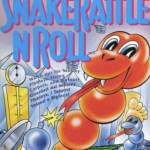
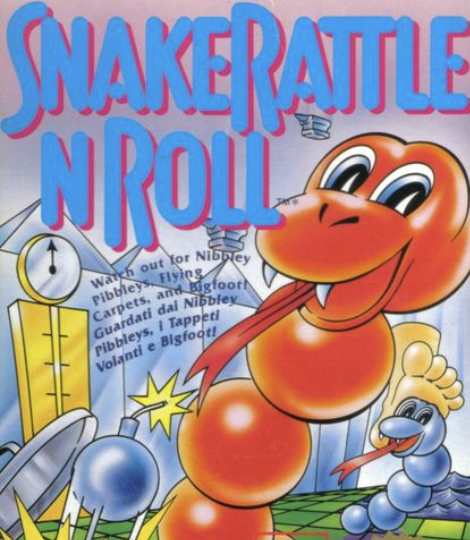
Snake Rattle ‘n’ Roll

Diving into the pure, reflex-driven engineering of the 8-bit era takes zero processing bloat in 2026. You can experience the peak of classic console design by launching optimized HTML5 emulation wrappers for an immediate browser match, running uncompressed ROM packets inside standalone emulation configurations, or auditing vintage map data.

Developed by Rare and published by Nintendo for the NES in July 1990, this landmark isometric platformer has players pilot two ravenous snakes — Rattle and Roll — up an 11-level cascading mountain. Hunt bouncing Nibbley Pibbleys with your tongue, grow your tail to hit the weigh-in scale, ring the bell, and climb to the moon. Movement is processed at a 26.565-degree diagonal offset — the drop-shadow beneath your snake, not your sprite’s face, is the true jump-targeting tool.

🖥️ Where to Play Today

Open internet ports supply clean access without expensive cartridge hunting:

🌐 HTML5 In-Browser NES Emulation
The original compiled NES machine code executes flawlessly inside standard browser containers — run Snake Rattle ‘n’ Roll instantly inside an open internet window with zero local footprint, installation risks, or security configurations.
🎮 Nintendo Switch Online (Expansion Pack)
The title is preserved in the Nintendo Switch Online NES library — the cleanest modern access route with save states, rewind, and 2-player co-op support. Also available via the Mega Drive / Genesis version (European Sega port, 1993) on Switch Online Mega Drive catalog.
🕹️ Gamepad API Cross-Pad Mapping
Contemporary web player portals feature instant plug-and-play controller mapping. Linking movement to a physical cross-pad provides the precise sub-millisecond diagonal click feedback required to navigate ice platforms and execute corner-buffer tongue strikes safely.
Browser (HTML5 NES) Nintendo Switch Online FCEUX / RetroArch NES Cartridge (1990) Mega Drive EU (1993)
Four Nibbley Pibbley Tiers — Weight Priority Index
⚪ Tier 1
Dull Gray Sphere
100 mass units
+1 tail segment
Minimal contribution — only eat if no higher-tier targets are accessible. Chasing gray spheres over red variants is the primary cause of slow weigh-in times.
🟡
🟡 Tier 2
Bright Yellow Orb
300 mass units
+2 tail segments
Standard acceleration baseline — treat as your default eating target when red variants are not immediately reachable without hazard exposure.
🔴
🔴 Tier 3
Deep Red Variant
500 mass units
+3 tail segments
Fast-track scale activation target — plan your diagonal pathing around red spawn zones. Skipping reds to chase grays bottlenecks your weigh-in time on later levels significantly.
👑
🏆 Tier 4
Golden Crown Entity
1,000 bonus units
Full tail extension
Instant weigh-in scale readiness — a single Golden Crown entity is worth 10 gray spheres. Prioritize at all costs. Spawn locations are fixed per level; memorize them.
Four Technical Layers & Key Numbers
⚙️ Four Primary Technical Layers
26.565°
The exact diagonal offset RAM mapping applies to every 2D controller input — converting a standard arrow press into an isometric trajectory. This is why your shadow, not your sprite, is the reliable jump reference.
  • 📐 Diagonal Jump-Vector Engine Pressing any directional arrow shifts the snake along a diagonal path at 26.565° — not a straight horizontal or vertical line. Standard depth perception fails in this perspective; always use the drop-shadow as your floor-contact reference point.
  • 🐍 Tail-Segment Growth Chain Nibbley Pibbleys exist in four color tiers with distinct mass values. Eating expands tail segment count — lengthening your hitbox while increasing structural mass toward the weigh-in threshold. Tail length IS your health bar.
  • 💥 Damage Deflation Script Hits strip earned tail segments rather than depleting a health pool. Zero segments = explosion and life loss. This means a fully-grown snake arriving at the weigh-in scale has more survivability than a minimal-weight one — growth and defense are unified.
  • 👥 Dual Co-Op — Shared Nibbley Pool Simultaneous 2-player mode puts both Rattle and Roll on the same screen sharing the same Nibbley Pibbleys pool. The screen scrolls with the leading player — a trailing player can be crushed by the screen boundary if the leader climbs too quickly.
📊 Snake Rattle ‘n’ Roll — Key Numbers
Parameter Value
📅 Release Date July 1990 (NES)
🏢 Developer / Publisher Rare / Nintendo
🗺️ Total Levels 11 (stacked mountain)
📐 Isometric Axis Offset 26.565 degrees
👑 Golden Crown Mass Value 1,000 units (full tail)
🎵 Composer David Wise
Then vs. Now
📼 1987 — Rigid Tile-Snapping Isometrics
Early isometric console titles used completely rigid tile-snapping grids with no physics variables, non-existent shadow tracking, and dropped diagonal jump inputs. The 8-bit NES had no native isometric support — Rare hand-coded the entire perspective simulation at the assembly level, converting 2D controller input into a diagonal trajectory at 26.565° within the hardware’s constraints.
🎯 Today — Emulated & Preserved
Fully fluid browser emulation via HTML5 NES containers and Nintendo Switch Online preserves the original machine code with zero accuracy loss. The Predictive Nibbley Pibbley bounce AI — which calculates and forces a diagonal bounce-away when you approach with full momentum — is faithfully reproduced, meaning the corner-buffer tongue technique works identically in emulation.
Expert Tactics — Shadow Tracking & Corner-Buffer Tongue Strikes
🎯 Drop-Shadow Alignment Method
  • 🚫 Never Use Your Snake’s Face as the Jump Reference The isometric perspective tricks human depth perception — aligning your snake’s face visually with an elevated block almost always results in a missed jump. The internal code checks positioning against a flat 2D floor grid, not the 3D visual model.
  • 👁️ Track the Small Black Drop-Shadow Dot The drop-shadow beneath your snake’s tail shows exactly where your character will make floor contact on the map plane. Align the shadow dot to the target platform during the airborne arc — not your snake’s visual body — to clear narrow gaps with absolute certainty.
  • 🎯 Predictive Nibbley Pibbley Bounce — Approach at Angle The collision AI forces a Nibbley Pibbley to bounce in the opposite diagonal direction when you approach with full forward momentum. Approach at a 45° angle to the entity’s path rather than sprinting head-on — this intercepts the bounce trajectory rather than triggering it away from you.
🐍 Corner-Buffer Tongue Strikes & Co-Op Rules
  • 🚫 Never Sprint Into Open Fields Near Enemy Patrols Sprinting directly into open food zones with toilet seats or giant feet patrolling exposes your front hitbox — one hit strips tail segments and potentially drops you below the weigh-in threshold.
  • 🧱 Park Behind a Solid Corner → Hold Attack Key The tongue asset extends through adjacent structures without losing hit detection. Position your snake behind a solid block corner, hold the attack key, and safely vacuum up nearby Nibbley Pibbleys from complete cover — zero hazard exposure, maximum weight accumulation speed.
  • 👥 Co-Op: Designate Zones, Never Race the Camera In co-op, the leading player scrolls the screen — if the trailer falls behind the scroll boundary, they are instantly eliminated. Designate one player to eat lower-tier gray spheres and the other to pursue red and golden variants for equalized weigh-in arrival.
Technical Setup
⚙️ Emulator Configuration
🖥️ Strict 4:3 Integer Aspect Lock
The game’s visual layouts were built for square analog CRT televisions. Forcing a 16:9 widescreen stretch warps the isometric grid angles — a distorted grid makes diagonal jump path calculation nearly impossible. Always lock your viewport to a clean 4:3 integer box inside your emulator video options.
💾 SRAM — No Browser Cleaning Post-Session
Browser-bound emulation wrappers use temporary local cookies to track active stage progress, high-score milestones, and cleared board configurations. Avoid aggressive automatic privacy cleaning tools after a session to protect your Snake Rattle ‘n’ Roll save data.
🎮 Digital D-Pad — Stable Polling Profile
Adjust your controller or mouse polling rate to a stable profile to prevent diagonal input drift. The 26.565° trajectory calculations are sensitive to input ghosting — a drifted diagonal input sends your snake off its intended platform vector toward a gap.
👁️ Drop-Shadow Jump Rule: The single most impactful technique adjustment in the entire game. On any jump toward an elevated platform, stop watching your snake’s body and watch only the drop-shadow dot. The shadow tracks your floor-contact position on the 2D grid beneath the isometric display. When the shadow aligns with the target platform’s edge, you will land. When it is over empty space, you will fall — regardless of where your snake’s body appears to be visually. Apply this to every jump from Level 1 onward to build the reflex before the ice stages make it mandatory.
⚠️ Input Latency Warning: Navigating narrow mountain ridges and avoiding sudden traps requires control paths within five-millisecond frames. Any rendering stutter drops a directional command mid-diagonal. Enable Hardware Acceleration at its highest profile in your browser’s advanced properties dashboard and close memory-heavy background media feeds for perfectly smooth, constant frame delivery during Snake Rattle ‘n’ Roll sessions.
Summary of Tactics
1
Track only the drop-shadow dot during jumps — not your snake’s body. The shadow shows true floor-contact position on the 2D grid beneath the isometric perspective.
2
Prioritize Deep Red Variants (500 mass, +3 segments) and Golden Crown entities (1,000 mass, full tail) over gray spheres — skipping reds to chase grays severely bottlenecks weigh-in speed.
3
Corner-buffer tongue strike: park behind a solid block, hold attack key — the tongue extends through structures without losing hit detection, delivering safe feeding from full cover.
4
Approach Nibbley Pibbleys at a 45° intercept angle — full forward momentum forces them to bounce diagonally away. Cut the angle to meet the predicted bounce path instead.
5
In co-op, the screen scrolls with the leading player — never let the trailer fall behind the scroll boundary. Designate food zones and keep pace synchronized above all else.
6
Remember that tail length is your health bar — arrive at the weigh-in scale with significant surplus mass. Extra tail segments absorb hits on the scale platform from patrolling enemies without dropping you below threshold.
The brilliant engineering behind this 1990 Rare milestone continues to earn immense praise from retro platformer purists, game design historians, and browser-bound simulation fans worldwide. By hand-coding a genuine isometric perspective into 8-bit NES hardware with no native support — converting standard controller inputs to a 26.565° diagonal trajectory matrix — Rare produced a platformer where spatial awareness, tail management, and careful feeding loops combine into one of the most demanding and rewarding arcade experiences of the era. Calibrate your 4:3 display, lock your shadow-dot focus, and conquer the mountain.

Play Snake Rattle 'n Roll game online in your browser free of charge on Arcade Spot. This game is a classic holiday-themed platform game that works in all major modern web browsers. This online game is part of the Action, Platform, Emulator, and SNES gaming categories. Snake Rattle 'n Roll has festive levels, colorful graphics, and fun retro gameplay for fans of old-school adventures. If you enjoy this game then also play other retro games on our website. Arcade Spot brings you the best games without downloading and a fun gaming experience on your computers, mobile phones, and tablets. New arcade games and the most popular free online games are added every day to the site.