





Child of Fire Thermal Displacement Engines and Level Traversal Architecture

4.1537
child of fire thermal displacement engines and level traversal architecture game
Play Game

Game Information

child of fire thermal displacement engines and level traversal architecture game
Child of Fire

Engaging with optimized interactive design requires zero local installation overhead in 2026. You can explore Child of Fire by launching its HTML5 interactive capsule for an instant browser session — no download, no installation, no account required.

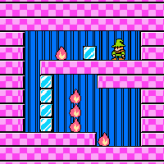
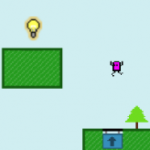
Child of Fire is a browser-based HTML5 variable-mass physics platformer. Igni — a living spark — fires projectiles to clear obstacles, but every shot reduces physical volume by exactly 15%, simultaneously altering jump height, collision boundaries, and water hazard vulnerability. Jump velocity follows Vy = K/M (inverse proportion to mass): shrinking to Micro Spark (8×8px) grants +42% vertical thrust but cuts horizontal momentum by more than half. 20 Fire Spirits must be rescued. Water contact at any size is instant extinguishment.

🖥️ Where to Play Today

Open-access browser deployment — zero installation, instant access:

🌐 Browser — Instant HTML5 Canvas Access
Child of Fire runs directly in any modern browser — WASD or Arrow keys for movement, F/J/Z for fireball projectiles, S/Down Arrow for Enflame Overdrive. No download, no account, no plugin. Enable Hardware Acceleration for smooth particle rendering during Enflame Overdrive sequences.
🎮 Gamepad / Fight Stick — Dead-Zone 5%
Map directional lines, fireball discharge, and Enflame Overdrive to a gamepad or fight stick. Set dead-zone to exactly 5% — precision micro-tunnel navigation at Micro Spark (8×8px) requires clean sub-pixel movement registration. Dead-zone above 5% causes directional drift that shifts the minimal hitbox into water hazard contact.
💾 Cookie Progress — Normal Browser Mode
Session progress and Fire Spirit rescue counts are stored in browser cookies. Play in normal (non-incognito) mode to retain stage unlock status. Avoid cookie clearing after play — rescuing all 20 Fire Spirits across multiple sessions requires persistent save tracking.
Browser (HTML5 Canvas) WASD / Arrow Keys F / J / Z — Fireball S / ↓ — Enflame Overdrive No Download Required
Three Size States — Vy = K/M Physics Formula
🔥
Maximum Spark
24 × 24 px
⬆️ Baseline (1.0× velocity)
High kinetic smash power against basic wooden walls — full forward momentum for wide gap traversal
⚠️ Cannot enter 1-tile horizontal micro-tunnels
🟠
Medium Ember
16 × 16 px
⬆️ Intermediate (1.25× velocity)
Balanced clearance for standard cavern drops — fits most mid-width passages with partial forward momentum retained
⚠️ Vulnerable to mid-range water droplet drop arcs
Micro Spark
8 × 8 px
⬆️ Maximum (+42% vertical thrust)
Clears narrow drainage pipes and micro-vents — only size fitting 1-tile horizontal tunnels
⚠️ Near-zero forward momentum; unstable under wind load
Three Core Systems & Key Numbers
⚙️ Physics Formula & Core Systems
Vy = K / M
Jump velocity scales as an inverse proportion to current pixel mass — halving mass doubles vertical thrust. Micro Spark (8×8px) achieves exactly +42% vertical velocity vs. Maximum Spark baseline, but horizontal momentum drops by more than half simultaneously.
−15%
Volume reduction per projectile fired. Each fireball shrinks Igni by 15% — altering jump arc height, collision boundaries, and water hazard vulnerability simultaneously. Mass cannot be recovered mid-stage.
  • 💧 Water Hazard — Instant Extinguishment, Any Size Water contact triggers immediate frame-perfect stage failure regardless of size. Smaller states have a reduced thermal shield perimeter — the 8×8px Micro Spark’s collision boundary is so tight that airborne water droplets require extremely precise routing corrections. Map all droplet trajectories before shrinking.
  • 🔥 Enflame Overdrive — Hold S/↓ Only for Wall Duration Overdrive radiates a thermal field melting iron walls and burning wooden barricades. Energy drains continuously while active — hold the input only during the wall crossing, release the microsecond the boundary clears to preserve reserve energy for subsequent barriers in the same chamber.
📊 Child of Fire — Key Numbers
ParameterValue
🖥️ PlatformBrowser (HTML5 Canvas)
💥 Volume per Shot−15% per fireball
⬆️ Micro Spark Vy Boost+42% vertical thrust
Micro Spark Size8 × 8 pixels
👻 Fire Spirits to Rescue20
💧 Water ContactInstant extinguishment

Controls: WASD/Arrows = move · F/J/Z = fireball · S/↓ = Enflame Overdrive

Then vs. Now
📼 Early Web Canvas Era
An early web-based prototype pushing classic browser canvas limits — simple directional inputs, local cookie session saves, and noticeable rendering lag during large particle effect volumes in Enflame Overdrive. The variable-mass Vy = K/M formula was the title’s defining innovation in a browser landscape of static-hitbox platformers.
🎯 Today — Native HTML5 Canvas
Preserved on native HTML5 canvas with all Vy = K/M physics, −15% per shot volume reduction, and instant water extinguishment intact. Particle rendering that caused early slowdowns now runs smoothly. The mass-caching Overdrive timing and backward-from-narrowest-passage planning are documented in Child of Fire community speedrun notes.
Expert Tactics — Mass Management & Overdrive Timing
🔢 Mass Management — Plan Backward From Narrowest Passage
  • 🚫 Never Fire More Shots Than the Narrowest Passage Requires Mass cannot be recovered mid-stage. Overshooting required size in early chambers to clear obstacles faster — when fewer shots would suffice — creates an irreversible size deficit for later passages. Enter each chamber at the minimum size required for its narrowest obstacle, no smaller.
  • 📐 Identify Narrowest Passage First, Fire Only Required Shots If a chamber contains a 1-tile micro-tunnel, Micro Spark (8×8px) is required regardless of other obstacles. Plan backward from that constraint: fire only the shots needed to reach 8×8px, then navigate the full chamber in that state. Chambers without micro-tunnels should be cleared at Maximum Spark when possible.
  • 💥 Fire 2px Before Block Boundary Overlap Initiate fireball discharge exactly 2 pixels before the character overlaps with the target block — the blast intercepts the block during its vulnerable phase before Igni’s hitbox contacts the surface, clearing the obstacle without redundant mass waste from repeated shots at the same block.
🔥 Enflame Overdrive & Water Routing
  • ⚡ Release S/↓ the Microsecond the Wall Boundary Clears Enflame Overdrive drains energy every active frame. Hold S or Down Arrow precisely during the wall crossing and release immediately when clear — any extra frames drain energy needed for subsequent iron or wood barricades later in the same chamber. Precision on the release is as important as the activation.
  • 💧 Sequence Water Hazards Before Shrinking When Possible Water droplet routing at 8×8px requires frame-perfect corrections that are safely achievable at 24×24px. Map all water hazard trajectories before committing to size reduction — if a water section precedes a micro-tunnel in the same chamber, plan to cross the water at Maximum or Medium Ember size, then fire to reach Micro Spark after.
  • ⬆️ Micro Spark for Vertical Ascents Only — Not Wide Gaps The +42% vertical thrust at 8×8px is the right tool for tall vertical ascents — not for sections requiring horizontal distance. Near-zero forward momentum makes wide gap jumps impossible at Micro Spark. Use Medium Ember (1.25× velocity) whenever both vertical clearance and horizontal distance must be covered simultaneously.
Technical Setup
⚙️ Browser Configuration
🖥️ Native Canvas Ratio — No Forced Stretch
Avoid stretching the browser window — distorted pixel dimensions misrepresent the 8×8px Micro Spark hitbox relative to micro-tunnel widths and water droplet positions. What appears to be a clean passage can register as a hit on the actual collision boundary when the canvas is stretched.
⚙️ Hardware Acceleration — Enable for Particle Rendering
Enable Hardware Acceleration to offload Enflame Overdrive particle rendering to the GPU. Frame drops during Overdrive cause the energy drain to continue for additional frames past the intended release point — GPU offloading prevents this and keeps Overdrive timing frame-accurate.
💾 Normal Browser Mode — Cookie Persistence
Use standard (non-incognito) mode — incognito disables cookie tracking of all 20 Fire Spirit rescue counts. Close non-essential background canvas tabs; competing processes introduce fireball discharge lag that misses the 2-pixel pre-boundary initiation window.
🔢 Mass Economy — Backward Planning From Narrowest Passage: Mass cannot be recovered mid-stage — every fireball fired is permanently spent volume. Before entering any chamber, identify the narrowest passage first and calculate the exact shot count needed to reach that size. Firing excess shots to clear early obstacles faster creates a size deficit that makes late-chamber passages impossible. Maximum Spark entering a chamber with a micro-tunnel requires exactly enough shots to reach 8×8px — no more, no fewer. Mass economy compounds across the entire stage.
⚠️ Input Latency Warning: The −15% per shot volume system and Enflame Overdrive energy drain both respond at frame level. Browser stutter causes fireball discharges to register late (missing the 2-pixel initiation window) and Overdrive releases to hold extra frames (draining excess energy). Enable Hardware Acceleration at maximum in your browser settings and close background applications for perfectly smooth, constant frame delivery throughout Child of Fire sessions.
Summary of Tactics
1
Plan size backward from the narrowest passage — fire only the exact shots needed to reach required size. Excess shots in early chambers create irreversible deficits for later passages.
2
Initiate fireball 2px before block boundary — the blast intercepts during the block’s vulnerable phase before Igni’s hitbox reaches the surface, clearing without redundant mass waste.
3
Micro Spark (+42% Vy) is for vertical ascents only — near-zero horizontal momentum makes wide gap crossings impossible at 8×8px. Use Medium Ember when both vertical and horizontal clearance are needed.
4
Enflame Overdrive: hold S/Down for the wall duration only — release the microsecond the boundary clears. Every extra active frame drains energy needed for subsequent barricades.
5
Sequence water hazards before size reduction — routing corrections safe at 24×24px may be frame-perfect at 8×8px. Cross water sections at larger sizes when chamber layout allows it.
6
Play in normal (non-incognito) browser mode — incognito resets all 20 Fire Spirit rescue tracking on every session close.
The wonderfully inventive design behind Child of Fire demonstrates how a lightweight HTML5 canvas physics engine can deliver genuinely deep thermodynamic resource management — a living spark, a Vy = K/M inverse mass formula, −15% volume per projectile fired, three size states with distinct traversal profiles, and instant water extinguishment that makes every mass decision permanent. No download, no account, no friction: plan your size backward from the narrowest passage — and liberate every Fire Spirit.

Play Child of Fire game online in your browser free of charge on Arcade Spot. This game is a classic holiday-themed platform game that works in all major modern web browsers. This online game is part of the Action, Platform, Emulator, and SNES gaming categories. Child of Fire has festive levels, colorful graphics, and fun retro gameplay for fans of old-school adventures. If you enjoy this game then also play other arcade games on our website. Arcade Spot brings you the best games without downloading and a fun gaming experience on your computers, mobile phones, and tablets. New arcade games and the most popular free online games are added every day to the site.