









Tank Classic 1990 Breakdown of 8-Bit Grid-Based Armor Combat Engines

4.2659
tank classic 1990 breakdown of 8-bit grid-based armor combat engines game
Play Game

Game Information

tank classic 1990 breakdown of 8-bit grid-based armor combat engines game
Tank Classic 1990

Engaging with optimized arcade military history requires absolutely zero local hardware strain in 2026. You can explore Tank Classic 1990 by loading HTML5 interactive player capsules for an instant match, deploying uncompressed ROM files inside standalone frameworks, or launching directly in browser.

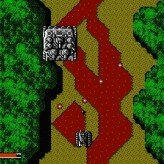
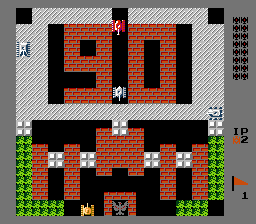
Tank Classic 1990 is a faithful NES/Famicom Battle City reconstruction — pilot a lone tank across 35 stages, annihilate exactly 20 enemies per stage, and protect the Eagle Base at the bottom center of the map. The Eagle Base is destroyed by a single stray round — including your own shots. The 13×13 grid uses 8×8px brick destruction per hit. Friendly fire doesn’t damage allies but induces a 45-frame motor paralysis. Star power-up stacked ×3 unlocks a steel-wall-piercing rail-gun.

🖥️ Where to Play Today

Stable digital hubs offer clear entry points without heavy local installations:

🌐 Browser — HTML5 NES Emulation
The complete original 8-bit machine code executes flawlessly in modern browser viewports — run Tank Classic 1990 instantly in any open internet window. All 35 stages, the 13×13 destructible brick grid, enemy spawning waves, power-up drops, and Eagle Base destruction logic are fully intact. Enable Hardware Acceleration for stable 60fps collision processing.
💻 FCEUX / Mesen (Desktop NES Emulator)
FCEUX and Mesen provide the most accurate NES emulation — full 60fps scanline rendering, save states for stage-clear route optimization, and input remapping for D-pad + fire. Essential for testing choke-point brick configurations and power-up cache timing across enemy spawn waves.
🕹️ D-Pad + Fire — Dead-Zone 5%
Map D-pad directional input and fire to a physical arcade stick or gamepad. Set dead-zone to exactly 5% — the 45-frame friendly fire paralysis window means a single mis-registered directional input during allied operations wastes nearly a full second of defensive mobility on the most critical containment frames.
Browser (NES Emulation) FCEUX / Mesen NES / Famicom Cartridge 35 Stages 2-Player Local Co-op
Four Adversarial Armor Classes
Tank Class Speed Hits Threat Counter-Measure
🟡 Basic Unit 1.0× 1 Low Simple frontal interception along primary entry lanes — use as choke-point practice
⚡ Fast Scout 2.2× 1 HIGH Pre-emptive lane blocking — do not let them reach the bottom grid. Priority target; 1 hit to kill
🔴 Power Raider 1.5× 1 SEVERE Fire from side brick cover — avoid direct face-to-face duels; their shells penetrate basic brick faster
🟤 Heavy Armor 1.0× 4 CRITICAL Continuous kiting — track hit count by color change per shell hit; 4 sequential shells required
Four Terrain Block Types
🧱
Brick Wall
Destructible by standard shells — each hit permanently erases an exact 8×8px quadrant. Chip strategically to create custom fire lanes or close enemy approach corridors. Own shells destroy own base wall just as easily.
Steel Barrier
Deflects all baseline shells — indestructible without 3× Star power-up rail-gun. Position near Eagle Base as permanent shielding. Steel walls are the only reliable permanent base defense.
🌊
Water Tile
Absolute vehicle block — tanks cannot cross. Projectiles pass freely over water, creating lethal high-risk firing zones. Route around water tiles; do not attempt to use them as cover since shells still hit.
🌳
Forest Foliage
Conceals all tank movement — both ally and enemy. Shells pass through foliage freely. Enemies hidden in forest must be located by shell contact. Track enemy count on sidebar to know when forest sectors are occupied.
Core Systems & Key Numbers
⚙️ Three Core Technical Systems
13×13
Grid Layout
20
Enemies per Stage
35
Total Stages
45 frames
Motor paralysis induced on an allied tank by friendly fire — nearly one full second of complete mobility lock at 60fps. In 2-player co-op, never fire toward a position your ally occupies, especially during Fast Scout interception.
  • 🏠 Eagle Base — 1 Shot from Any Source = Destroyed The Eagle Base at the bottom center is destroyed by a single round regardless of whether it comes from an enemy or your own tank. The software logic does not differentiate source. Immense restraint is required when firing upward from the bottom row — any shell that misses its target and travels past will hit the base.
  • ⭐ Star ×3 = Steel-Wall Rail-Gun Each Star power-up upgrades your tank’s armament. Collecting three Stars transforms your basic tank into a rail-gun chassis that penetrates solid steel barriers — allowing real-time map rewriting to create fully enclosed firing tunnels around the Eagle Base. Farm Star drops in early stages before the enemy composition becomes critical.
  • 👾 Spawns: Groups of 3 from Top Fixed Entry Points Enemies spawn in sequential groups of 3 from fixed insertion points at the top of the map grid. The sidebar shows the total remaining enemy pool. Blocking spawn corridors with brick destruction creates choke zones — enemies pile up at the entry point and can be targeted in rapid succession before spreading into the map.
📊 Tank Classic 1990 — Key Numbers
ParameterValue
🗺️ Grid Layout13 × 13
🧱 Brick Destruction Per Hit8 × 8 pixels
⏱️ Friendly Fire Paralysis45 frames
Fast Scout Speed2.2× baseline
🟤 Heavy Armor Hit Threshold4 sequential shells
🏠 Eagle Base Survival1 hit = destroyed
Then vs. Now
📼 1985 — Hardware-Bound Famicom Cartridge
A 1985 Famicom cartridge pushing early 8-bit sprite limits — rigid four-way directionality, local two-player wired hardware configuration, and noticeable screen flickering when more than four vehicles occupied the same horizontal rendering scanline. The original Battle City required physical Famicom hardware or the 60-pin cartridge format for any play.
🎯 Today — Browser + NES Emulation
Fully preserved via FCEUX, Mesen, and HTML5 browser NES emulation with all 13×13 grid physics, 8×8px brick destruction, 45-frame friendly fire paralysis, and Eagle Base single-shot vulnerability intact. The power-up caching strategy (never use Clock on cornered enemies, farm Star ×3 for rail-gun) is documented in Battle City / Tank Classic community speedrun wikis.
Expert Tactics — Power-Up Caching & Base Defense
Power-Up Cache Discipline
  • 🚫 Never Trigger a Power-Up When the Current Wave Is Already Cornered When a flashing red enemy appears, destroying it drops a power-up somewhere on the grid. If the current wave is already contained in a choke point, a Clock freeze is entirely wasted — frozen enemies were never a threat. Leave the item flashing on the field as a cached asset until a Fast Scout or Heavy Armor spawns at the top entry points.
  • ⏰ Clock — Hold for Fast Scout or Heavy Armor Entry The Clock power-up freezes all active enemies — its value scales directly with the danger level of the frozen tanks. A 2.2× Fast Scout frozen mid-run toward the Eagle Base is far more valuable than a frozen Basic Unit already contained in a brick corridor. Roll over the Clock only when the threat tier of active enemies justifies the freeze window.
  • ⭐ Farm Star ×3 Before Enemy Composition Becomes Critical Three consecutive Star upgrades transform the tank into a steel-wall-penetrating rail-gun. Use this state immediately to construct enclosed steel firing tunnels around the Eagle Base — permanent impenetrable shielding that removes the base’s single-shot vulnerability for the remainder of the stage. Farm Stars in early low-threat stages before Heavy Armor begins appearing.
🏠 Eagle Base Defense & Choke Management
  • 🚫 Never Fire Upward From the Bottom Row Unless Aim Is Confirmed The Eagle Base is directly above the bottom row’s center — a missed upward shot that passes the intended target hits the base. This is the most common cause of self-inflicted game overs. From the bottom row, only fire upward when the target is directly in the shell’s path with no open corridor to the Eagle Base behind it.
  • 🧱 Chip Brick Corridors to Create Choke Points at Spawn Entries Enemies spawn in groups of 3 from fixed top entry points. Strategically chip the brick walls adjacent to spawn entries to create narrow corridors that funnel all enemy traffic through a single firing lane. Tanks queued at the entry point can be targeted in rapid sequence before they disperse into the full map grid.
  • 🟤 Heavy Armor — Track Hit Count by Color Change Heavy Armor requires 4 sequential shells and changes color with each successful hit. Track the color state to know exactly how many shots remain. Never abandon a damaged Heavy Armor to chase other targets — a half-depleted Heavy Armor regains no damage if you disengage, but it will continue approaching the Eagle Base during your distraction.
Technical Setup
⚙️ Emulator Configuration
🖥️ Strict 4:3 Aspect Ratio — No Widescreen
The 13×13 grid assets were built for the NES’s native 4:3 output. Widescreen stretching warps the 8×8px brick quadrant dimensions — destroyed brick sections appear larger than their actual collision footprint, causing misaligned fire lane planning and inaccurate shell trajectory calculations through gap openings.
💾 SRAM — No Privacy Cleaning Post-Session
Browser NES emulation uses temporary local cookies to manage stage progress and high-score records. Avoid aggressive privacy cleaning after sessions — the 35-stage campaign requires persistent save data to resume mid-campaign without replaying completed stages from the beginning.
🕹️ Dead-Zone 5% — 45-Frame Friendly Fire Window
Set controller dead-zone to exactly 5%. In 2-player co-op, a mis-registered directional input that fires toward an ally position induces the 45-frame motor paralysis on the ally — 0.75 seconds of complete immobility during a Fast Scout flanking run. Clean first-input registration eliminates accidental co-op friendly fire events entirely.
🏠 Eagle Base Self-Destruction Rule: The software logic does not differentiate between enemy and friendly shells when evaluating Eagle Base damage — your own round destroys the base just as permanently as an enemy round. This creates the game’s defining psychological tension: firing upward from the bottom row requires absolute target confirmation before pressing fire. The correct defensive discipline is to position yourself on the flanks rather than directly below the base, eliminating the bottom-row upward firing scenario entirely. Once the rail-gun (Star ×3) is available, enclosing the base in steel immediately removes this risk for the stage.
⚠️ Input Latency Warning: The 60fps collision processing engine makes shell trajectory and enemy movement frame-dependent — any browser display stutter causes fire inputs to register on the wrong frame, shifting shells into friendly territory or missing the 2-pixel pre-boundary interception window against Fast Scouts. Enable Hardware Acceleration at maximum in your browser settings and close background applications for perfectly smooth, constant frame delivery throughout Tank Classic 1990 sessions.
Summary of Tactics
1
Never fire upward from the bottom row without confirmed target — a missed upward shell with no obstacle behind the target hits the Eagle Base, destroying it instantly regardless of source.
2
Farm Star ×3 in early low-threat stages — the rail-gun state allows immediate steel-wall construction around the Eagle Base, permanently removing its single-shot vulnerability for the remainder of the stage.
3
Hold power-up items on the grid as cached reserves — never trigger Clock on already-cornered enemies. Roll over it only when a Fast Scout (2.2×) or Heavy Armor is approaching the base.
4
Chip brick corridors at spawn entry points to create single-lane choke zones — enemies spawn in groups of 3 from fixed top positions and can be targeted in rapid sequence before they disperse.
5
Heavy Armor requires 4 sequential shells — track hit count by color change. Never abandon a partially damaged Heavy Armor to engage other targets; it will continue advancing on the Eagle Base during the distraction.
6
2-Player co-op: never fire toward a position your ally occupies — the 45-frame motor paralysis (0.75 seconds) induced on the ally by friendly fire is catastrophic during Fast Scout interception at the map’s lower thirds.
The highly innovative, wonderfully creative engineering behind this 1985 Famicom classic continues to hold an exceptionally respected position among retro tactical shooter fans, military arcade historians, and vintage software preservationists worldwide. By building a 13×13 destructible brick grid where every shell permanently rewrites the map, imposing single-shot Eagle Base vulnerability on both enemies and the player, and delivering four enemy classes with threat profiles from cannon fodder to 4-hit kiting gauntlets — Tank Classic 1990 transforms a simple arcade concept into a genuine mathematical exercise in territory management. Farm your Stars, cache your power-ups — and hold the Eagle Base.

Play Tank Classic 1990 game online in your browser free of charge on Arcade Spot. This game is a classic holiday-themed platform game that works in all major modern web browsers. This online game is part of the Action, Platform, Emulator, and SNES gaming categories. Tank Classic 1990 has festive levels, colorful graphics, and fun retro gameplay for fans of old-school adventures. If you enjoy this game then also play other retro games on our website. Arcade Spot brings you the best games without downloading and a fun gaming experience on your computers, mobile phones, and tablets. New arcade games and the most popular free online games are added every day to the site.