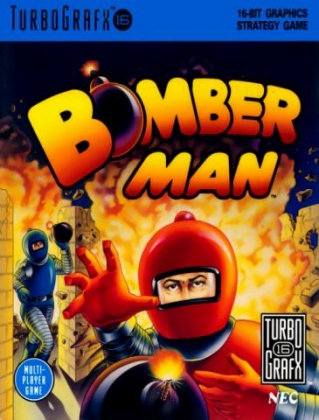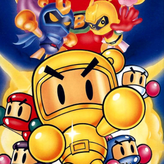








Super Bomberman: Panic Bomber World
Diving into pure, reflex-driven 16-bit history requires zero local hardware baggage in 2026. You can explore the definitive action of Super Bomberman: Panic Bomber World by launching optimized HTML5 SNES web player capsules for an instant browser match, running uncompressed ROM packages inside native standalone simulators, or auditing pristine physical cartridges.
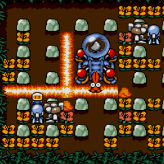
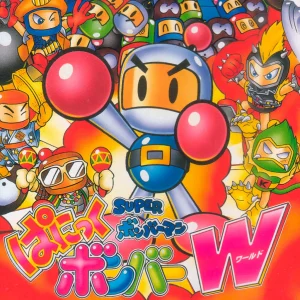
Developed by Raizing and published by Hudson Soft on March 1, 1995 — a Japanese-exclusive Super Bomberman falling-block puzzle game powered by the SA-1 coprocessor at 10.74 MHz for zero-slowdown 4-player rendering. White Bomber drops color-coded character head triplets to form lines, generates lit bombs via the fuse meter, and detonates them for chain reactions that send indestructible rubble to opponents. A deep enough combo chain deploys the massive Giant Bomb for a wide-area board purge. Loose cartridge price: $3–$9 USD; CIB: up to $40 USD.
🖥️ Where to Play Today
Stable digital ports offer clear entry points for this Japanese-exclusive import:
🌐 HTML5 In-Browser SNES Emulation
The complete original SNES machine code executes flawlessly in modern browser viewports — run Panic Bomber World instantly in any open internet window with zero footprint. SA-1 coprocessor emulation is handled transparently; all 4-player splitscreen rendering and bomb chain reaction physics run at full speed.
💻 RetroArch / SNES9x (Desktop)
RetroArch with the bsnes or SNES9x core provides the most accurate SA-1 coprocessor emulation — essential for correct chain reaction timing and Giant Bomb deployment thresholds. Save states enable cascade route optimization across all Story Mode boss encounters.
🕹️ Cross-Pad — Dead-Zone 5% for Block Drops
Map block rotations, fast-drops, and hold inputs to a physical cross-pad. Set dead-zone to exactly 5% — rapid column selection during high-velocity endgame phases requires clean first-click registration. Dead-zone above 5% delays column shift inputs and causes accidental misplacements at peak fall speeds.
Browser (SNES Emulation)
RetroArch / bsnes
SNES9x
SFC Cartridge (JP, 1995)
4-Player Multitap
Three-Stage Bomb Escalation System
💣 From Match Clear to Giant Bomb — The Chain Sequence
🎭 MATCH 3
character heads
fills fuse meter
→
💡 LIT BOMB
drops into board
adjacent clears = chain
→
💥 CHAIN REACTION
garbage vaporized
rubble sent to opponent
→
🔴 GIANT BOMB
wide-area purge
deep combo threshold
Every stage of this chain is interdependent — a single Match 3 that doesn’t connect to a lit bomb is passive board clearing. The competitive meta centers on positioning lit bombs adjacent to dense character clusters to maximize garbage output per chain link.
Four Game Modes
🗺️
Story Campaign
Branching 1-on-1 Gauntlet
✅ Scaled AI — practice chain depth
Branching one-on-one gauntlet against the brainwashed World Bombers. AI speed scales across the circuit — use early story opponents to practice Giant Bomb threshold depth before facing late-game AI that chain at near-human speed.
🎮
Multiplayer Versus
4-Player Simultaneous Split
✅ Multi-directional rubble deflection
Up to four simultaneous players via Multitap accessory — each board receives rubble from all active chain reactions simultaneously. Managing which opponent to target with rubble chains is the primary 4-player meta decision. Giant Bomb output hits all active boards at once.
💀
Dokuro Skull Mode
Rubble → Soft Blocks
⚠️ Randomized status ailment triggers
Replaces standard rubble items with soft blocks that trigger randomized status ailments — instantly shifts match dynamics in chaotic ways. Skill-set advantage is partially randomized by ailment RNG. Use as a casual/variety mode rather than competitive practice.
🔄
Free Practice Run
Single-Player Endless Loop
✅ Fixed acceleration — no opponent pressure
Single-player endless grid with fixed linear block acceleration — the optimal environment for cascade route optimization without opponent rubble pressure. Use Free Practice to map Giant Bomb threshold depth and pre-set lit bomb positioning strategies before Story/Versus matches.
Three Technical Systems & Key Numbers
⚙️ Three Core Technical Systems
10.74 MHz
The SA-1 coprocessor clock speed — Nintendo’s specialized enhancement chip running at 10.74 MHz (vs. the SNES base CPU at 3.58 MHz). Enables real-time 4-player sprite rendering and complex memory mapping with zero frame slowdown.
-
🎭 Match Mechanics — Triplet Drops in 3 Directions
Blocks fall in vertical triplets of color-coded character heads. Three identical faces in a horizontal, vertical, or diagonal line clear and fill the fuse meter. The fuse meter fills systematically — a fully filled meter drops a lit bomb into the active matrix regardless of current board state.
-
💥 Chain Reaction — Adjacent Ignition
Clearing a character cluster adjacent to a lit bomb ignites a chain reaction that vaporizes neighboring garbage blocks and transmits indestructible rubble to opponent boards. The rubble volume scales with chain depth — a 3-link chain sends significantly more rubble than a 1-link detonation.
-
🔴 Giant Bomb — Deep Combo Threshold
Achieving a continuous chain of sufficient depth triggers a massive red Giant Bomb. Wide-area structural purge deletes multiple rows simultaneously and causes graphical disruption to the enemy’s interface. The exact threshold scales with game speed — at maximum speed, the Giant Bomb requires longer chains to trigger.
📊 Panic Bomber World — Key Numbers
💰 Collector Market Prices (2025): Loose cartridge trades between $3–$9 USD. Pristine complete-in-box editions command upward of $40 USD among global import preservationists. Japanese-exclusive — western access required specialty import houses at original release.
| Parameter |
Value |
| 📅 Release Date |
March 1, 1995 (SFC · JP) |
| 🏢 Developer / Publisher |
Raizing / Hudson Soft |
| ⚙️ SA-1 Coprocessor Speed |
10.74 MHz |
| 👥 Max Players |
4 (Multitap) |
| 🎭 Match Direction |
Horizontal / Vertical / Diagonal |
| 🌏 Region |
Japan only |
Then vs. Now
📼 1995 — SA-1 SNES Import Exclusive
A 1995 Japanese-exclusive Super Bomberman falling-block puzzle title powered by the SA-1 coprocessor — unknown outside Japan at launch, requiring specialty import distributors for western access. The SA-1 at 10.74 MHz enabled 4-player splitscreen rendering impossible on standard SNES hardware without slowdown. Loose cartridges entered western collector awareness gradually through import retro markets.
🎯 Today — Browser / RetroArch Preserved
Fully preserved via RetroArch (bsnes core) and HTML5 browser emulation with accurate SA-1 coprocessor simulation — all chain reaction timing, Giant Bomb thresholds, and 4-player rubble deflection physics reproduced accurately. The cascade positioning and lit bomb adjacency strategy are documented in Panic Bomber speedrunning communities as the competitive baseline for Story Mode boss clear times.
Expert Tactics — Cascade Positioning & Giant Bomb Setup
💣 Cascade Positioning — Lit Bomb Adjacency
-
🚫 Never Drop Lit Bombs in Empty Column Space
A lit bomb dropped into an empty column area detonates in isolation — zero chain reaction, zero rubble output. The fuse meter investment that generated the lit bomb is entirely wasted. Always have a target character cluster positioned adjacent to the intended lit bomb landing column before dropping.
-
🎭 Pre-Set Character Clusters Adjacent to Planned Bomb Columns
The highest-efficiency cascade strategy: while the fuse meter is filling, use the current block drops to build dense character clusters in columns adjacent to the expected lit bomb landing position. When the lit bomb drops into that column, the adjacent cluster ignites immediately — maximizing chain link count and rubble output per detonation.
-
🔴 Giant Bomb Threshold — Build Chains, Not Single Detonations
The Giant Bomb triggers on deep combo chains — not on the size of a single detonation. Build cascading chain scenarios where each bomb ignition triggers the next adjacent cluster, extending the chain depth. A 4-link chain from a single lit bomb drops a Giant Bomb; 4 separate 1-link detonations do not.
🏆 4-Player Strategy & Free Practice Optimization
-
🎮 4-Player: Target the Leader with Giant Bomb Rubble
In 4-player matches, Giant Bomb rubble hits all boards simultaneously — but focus chain timing to coincide with the leading player’s board being most cluttered. A Giant Bomb blast into a nearly-full board causes an immediate ceiling-fill loss; the same blast into a mostly clear board is absorbed with minimal impact.
-
🔄 Free Practice — Map Lit Bomb Drop Columns First
Use Free Practice (no opponent pressure) to map which columns the fuse meter consistently drops lit bombs into for your current match style. The lit bomb drop position is partially influenced by your active board state — learning your personal tendency allows pre-seeding adjacent columns with matching character clusters.
-
🎭 Triplet Orientation — Diagonal Matches for Dense Boards
Horizontal and vertical matches are standard, but diagonal orientation clears characters across two columns and two rows simultaneously — dramatically more efficient on dense boards where horizontal space is limited. Practice diagonal match reading in Free Practice before the board fills enough to require it in Story/Versus.
Technical Setup
⚙️ Super Bomberman Emulator Configuration
🖥️ Strict 4:3 Aspect Ratio Lock
Game assets were illustrated for traditional 4:3 television screens. Forcing a 16:9 horizontal stretch warps the falling block column proportions — the visual spacing between columns no longer reflects actual hitbox column widths, causing misaligned drop inputs. Always lock viewport to a clean 4:3 format.
💾 SRAM — No Privacy Cleaning Post-Session
Browser SNES emulation uses temporary local cookies to manage Story Mode progress, unlocked opponents, and high-score records. Avoid aggressive privacy cleaning after sessions — Story Mode branching progression requires persistent save data to track brainwashed World Bomber defeated counts.
🕹️ Cross-Pad Dead-Zone 5% — Rapid Column Selection
Set dead-zone to exactly 5% for fast-drop and column shift inputs. The SA-1 coprocessor processes board updates at 10.74 MHz — at high game speeds, column shift windows are measured in frames. Dead-zone above 5% adds input latency that misses rapid column corrections during peak fall velocity endgame phases.
💥 Chain Depth vs. Single Detonation: The most common misunderstanding in Panic Bomber World. The Giant Bomb triggers on chain depth — not detonation size. A lit bomb that clears 8 characters in one blast but ends the chain does NOT deploy a Giant Bomb. A lit bomb that clears 3 characters but ignites an adjacent lit bomb (which clears 3 more, which ignites another) builds the combo counter toward Giant Bomb threshold. Build boards with multiple adjacent lit bomb opportunities rather than maximizing single-detonation cluster size. The chain counter, not the individual explosion, is the metric that matters.
⚠️ Input Latency Warning: At peak game speeds, column shift and fast-drop inputs must land within exact millisecond boundaries. The SA-1’s 10.74 MHz processing means board state updates happen faster than on standard SNES titles — any browser display stutter causes a block to lock into the wrong column before the corrective input registers. Enable Hardware Acceleration at its highest profile in your browser’s advanced properties hub and close background applications for perfectly smooth, constant frame delivery throughout Panic Bomber World sessions.
Summary of Tactics
1
Never drop a lit bomb into an empty column — zero chain reaction, zero rubble. Always pre-seed adjacent columns with character clusters before the lit bomb drops.
2
Giant Bomb triggers on chain depth, not single detonation size — build boards with multiple adjacent lit bomb ignition opportunities to extend chain link count.
3
Use Free Practice (no rubble pressure) to map which columns your current board style consistently drops lit bombs into, then pre-seed those columns during Story/Versus matches.
4
Diagonal match orientation clears across two columns and two rows simultaneously — more efficient than horizontal/vertical on dense boards where column space is limited.
5
4-Player: time Giant Bomb chain detonation to coincide with the leading player’s board being most cluttered — the same rubble volume that is catastrophic on a full board is negligible on an empty one.
6
Lock to 4:3 aspect ratio — widescreen stretch distorts falling block column proportions so the visual spacing no longer matches actual hitbox column widths, causing systematic misaligned drop inputs.
The highly innovative, wonderfully creative engineering behind this 1995 Raizing classic continues to hold an exceptionally respected position among retro puzzle fans, competitive falling-block historians, and vintage software preservationists worldwide. As a Japanese-exclusive Super Bomberman title leveraging the SA-1 coprocessor at 10.74 MHz for zero-slowdown 4-player rendering — and delivering a bomb-chain cascade system where Giant Bombs emerge from deep combo depth rather than single-detonation size — Panic Bomber World demonstrates how hardware optimization and mechanical depth can coexist in a 16-bit cartridge. Pre-seed your columns, build your chains — and detonate the competition.