Color Pop 3D
Engaging with responsive velocity puzzles remains instantly accessible across contemporary network setups in 2026. You can experience Color Pop 3D through specialized web-based HTML5 platforms for an immediate browser session, deploy smooth configuration profiles via standalone software apps, or manage casual palettes using dedicated mobile creative frameworks.
This multi-faceted concept spans three distinct software environments — a fast-paced web cannon game, an advanced 3D printing plastic blending tool, and a generative AI suite — each requiring users to synchronize rapid projectile trajectories, balance raw color data parameters, or shade intricate digital vector fields.
Three Distinct Software Environments
🎮 Web Game
Paint Cannon Arena
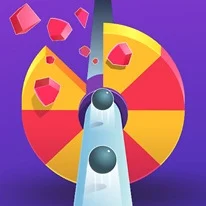
A fast-paced skill experience challenging players to fire paint payloads onto rotating multi-tiered pipeline fans — demanding flawless reflexes to completely coat the spinning geometry without striking a blade.
🖨️ 3D Printing Tool
HueForge Color Mode
An intricate software painting mode inside HueForge that reworks standard plastic layer stacking using direct RGB separation values rather than simple luminance variables — isolating vibrant foregrounds over balanced grayscale backdrops.
🤖 AI Creative Suite
Color Pop AI
A premium mobile creative utility featuring an automated text-to-sketch generator. Users input descriptive text prompts to synthesize custom canvas layouts, then paint the resulting vector graphics with realistic brush physics and 3D-shaded gradients.
🖥️ Where to Access Color Pop 3D Today
The global web structure provides verified paths across all three software environments:
🌐 Web Shooter Portal (HTML5)
The fast-paced pipeline fan variant is accessible via open HTML5 portals — rendering immediately inside standard modern browser tabs without local memory allocation penalties.
📱 Mobile App Ecosystem
Casual mobile titles including ball-launching Color Pop 3D! and family-friendly Bubble Pop 3D are hosted directly on the Apple App Store, utilizing native mobile processing loops for swift gesture detection.
💻 Desktop Slicing Pipeline
The HueForge plastic painting utility runs as a local native application on specialized desktop environments, connecting directly with 3D printers via structural file exports.
Browser (HTML5)
Apple App Store
HueForge (Desktop)
Color Pop AI (Mobile)
Obstacle Profiles & Key Metrics
🚧 Obstacle Grid Components
| Component |
Mechanical Hazard |
| 💨 High-Speed Fan Blade |
Destroys paint payloads on contact — instant game over if struck |
| 🎨 Plastic Luminance Bleed |
Contrasting mid-tones bleed into gray when luminance is ignored over RGB |
| 📏 Layer Stacking Limit |
Exceeding height tolerance triggers mechanical printer jams |
📊 Color Pop 3D Key Metrics
| Parameter |
Value |
| 📏 Optimal Layer Height (HueForge) |
0.08 mm |
| 🎨 Color Mode |
RGB isolation |
| 🖨️ Plastic Spool Order |
Low TD → High TD |
| 🎮 Fan Fire Timing |
Post-blade sweep |
| 🖥️ V-Sync Required |
Yes (high refresh) |
| 🤖 AI Prompt Style |
Texture + lighting terms |
Then vs. Now
📼 Early Era — Flat 2D Color Tools
Flat, pixelated 2D wheels with static paint tools, simple collision rules, and rigid layer parameters that routinely caused washed-out image tones. Physical 3D printing was limited to single-extrusions with no layer-based color blending capability.
🎯 Today — Dynamic 3D Color Systems
Dynamic 3D physical models featuring generative AI text-to-sketch engines, real-time vector collision physics, and advanced RGB isolation maps that translate digital pixels into physical multi-masterpieces — spanning web games, precision printing tools, and creative AI suites.
Expert Tactics — Fan Timing & Plastic Arrays
🎯 Web Cannon Game — Fan Blade Timing
-
🔍 Analyze the Spin Pattern First
Take a few seconds to study the fan’s rotation rhythm before firing your initial shot. The rotation engine uses alternating speed cycles — a blade can jump from a slow crawl to a high-speed spin in milliseconds.
-
⏱️ Fire in Controlled Bursts
Do not continuously click to spam paint at rotating fans. Instead, fire in controlled bursts right after a blade sweeps past your reticle line — giving your payload plenty of room to clear the gap and coat the pipeline surface safely.
-
🎯 Watch for Rhythmic Pause Points
Every fan features brief pause windows between speed cycles. These are your optimal firing windows — learn each stage’s pause rhythm before committing to sustained paint runs.
🖨️ HueForge 3D Printing Mode
-
📦 Arrange Spools Low TD → High TD
Always arrange physical plastic spools from lowest transmissive distance to highest. Placing a highly translucent red material beneath a solid high-opacity white layer causes underlying colors to bleed through unevenly.
-
📏 Lock Layer Height to 0.08mm
Keep layer heights locked at exactly 0.08mm to give colors optimal space to stack cleanly without muddying fine details in the final physical model.
-
🧪 Calibration Test First
Always run a quick test slice on a small calibration step-block before committing to a massive multi-color 3D print design. Verify plastic opacity using the exact TD metric from your spool label.
🤖 AI Art Generator Tip: When using the Color Pop AI text-to-sketch generator, add specific texture terms like “cinematic lighting” or “3D shading” to your prompts. These additions create richer, more satisfying vector layouts with stronger depth and gradient variation for coloring.
⚠️ Browser Performance Warning: Landing precise shots between fast-moving fan blades requires instant reaction times — even a tiny bit of browser lag will cause paint to strike an obstacle. Enable Hardware Acceleration in your browser configuration panel, clear high-resource background applications, and enable V-Sync on high refresh rate monitors to eliminate screen tearing during rapid rotation tracking.
Summary of Tactics
1
Analyze the fan blade’s rotation rhythm for several seconds before firing — alternating speed cycles make spam-clicking a guaranteed failure.
2
Fire paint cannons in controlled bursts immediately after a blade sweeps past your reticle — never during an active high-speed spin phase.
3
Arrange HueForge plastic spools from lowest TD to highest — translucent materials under opaque layers cause visible bleed-through.
4
Lock HueForge layer height to exactly 0.08mm before printing any multi-color design.
5
Run a calibration step-block test before every large 3D print — verify plastic opacity with the TD metric on your spool label first.
6
Add “cinematic lighting” or “3D shading” to AI art prompts for richer gradient depth and more satisfying vector layouts.
The impressive variety of this digital color spectrum continues to fascinate casual web players and industrial design creators around the globe. Whether you are aiming for a flawless high score on the rotating fans, blending beautiful layers for a physical 3D print, or generating unique AI art — Color Pop 3D delivers an exceptional mix of creative expression and mechanical precision. The targets are spinning, the extruder lines are heated, and the canvas is blank. Configure your controls, calibrate your hardware, and master the ultimate field challenge.