


DD Crew
Exploring the peak of 16-bit arcade combat requires zero computing bloat in 2026. You can experience the complete evolution of side-scrolling fighting systems by running optimized HTML5 emulation layers for an immediate browser session, booting ROM packets inside standalone emulator suites, or tracking down authentic System 18 hardware boards.
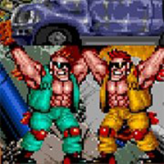
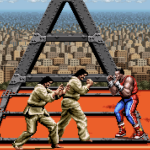
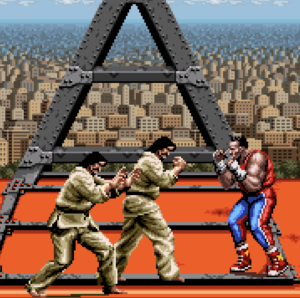
Engineered by Sega AM3 on the System 18 board (June 1991), DD Crew is a 4-player co-op brawler with three mechanics that define its entire tactical identity: throws only work on downed enemies (not standing), basic attacks hit only one target regardless of enemy clustering, and the dash special has no invincibility frames — interrupted startup deals severe health penalties. The title name is a Japanese onomatopoeia: どんどん来るー (Don Don Kuruu) — “more and more keep coming.”
🖥️ Where to Play Today
Modern open-access ports offer stable connections without expensive vintage hardware:
🌐 HTML5 In-Browser System 18 Emulation
The original compiled System 18 machine code executes flawlessly inside modern browser frames — run DD Crew instantly in any open internet window with zero hard drive fragmentation. All ground throw buffering, single-target hit detection, and four-player local input support are fully functional.
🎮 4-Player Local Co-Op (Up to 4 Simultaneous)
Up to four simultaneous players via local input mapping in emulation. A real-time KO counter tracks each player’s personal contribution independently alongside their health meter — facilitating direct competitive scoring alongside cooperative stage clearing.
🕹️ Arcade Stick — Dead-Zone 0%
Set USB arcade stick or gamepad dead-zone to exactly 0% to prevent input drift on double-tap dash commands. The dash special relies on a clean two-tap directional input — dead-zone threshold above 0% causes the second tap to misregister and prevents the dash animation from initializing.
Browser (System 18)
MAME
4-Player Co-Op
System 18 Arcade Board
Four Playable Brawlers
🥊
F.F. — All-Rounder
Balanced · Mid-Range Jab Combo
✅ Uniform recovery speed frames
Consistent mid-range jab combo axis — reliable recovery on all moves. Best for new players learning ground throw buffering timing. Uniform recovery means no situational penalties on whiffed attacks.
🦵
Buster — Speed Fighter
Agile · High-Angle Aerial Kick
✅ Rapid recovery on whiffed hits
High-angle aerial kick reaches elevated screen coordinates. Rapid recovery on missed attacks minimizes punishment windows. Ideal for the dash-cancel outer-lane technique — fastest repositioning speed between vertical lanes.
💪
King — Powerhouse
Heavyweight · Low-Velocity Power Slam
⚠️ Massive damage — slow escape lines
Highest damage output per ground throw — the body projectile travels farther, clearing more trailing enemies per toss. However, slow movement speed bottlenecks rapid vertical lane repositioning required for dash-cancel safety technique.
💥
Gung Ho — Military Striker
Rugged · Forward Shoulder Ram
✅ Deep forward hitbox placement
Forward shoulder ram axis places the attack hitbox deeper into the enemy formation than any standard jab — the best option for initiating knockdowns from slightly outside standard punch range, useful for safe ground throw setup distance.
Three Core Technical Rules & Key Numbers
⚙️ Three Core Mechanical Rules
64px
Character sprite height — Sega System 18 hardware pushes oversized 64-pixel tall sprites matching premium premium brawlers of the era, placing significant demands on screen-space collision checks per frame.
-
🎯 Post-Knockdown Throw Only — No Standing Grabs
The throw script initializes exclusively after an opponent hits the ground. Standing over a fallen enemy and tapping attack lifts the body — converting it into a horizontal projectile that knocks over every trailing thug in its path. Attempting to grab a standing enemy does nothing.
-
👊 Single-Target Hit Detection — No Crowd Pierce
Standard punch and kick combos connect with only the leading enemy sprite — even if three thugs occupy identical vertical pixel coordinates. Trailing enemies march through your attacks freely, surrounding you if you rely on basic combos in dense formations.
-
⚡ Dash Special — No Invincibility Frames
Double-tap directional + attack/jump triggers the dash special. However, any hit during the multi-frame startup animation cancels the attack and sends the brawler backward with severe health penalties. Never launch dash specials into the center of enemy packs.
📊 DD Crew — Key Numbers
Title Etymology: Western marketing claimed “Dynamite Demolition Crew” — but internal design documents reveal it is a phonetic play on どんどん来るー (Don Don Kuruu): “more and more keep coming.” A meta-commentary on the endless enemy wave design baked directly into the game’s title.
| Parameter |
Value |
| 📅 Release Date |
June 1991 (Arcade) |
| 🏢 Developer |
Sega AM3 |
| 🖥️ Hardware |
Sega System 18 |
| 👤 Max Players |
4 simultaneous |
| 🗺️ Total Stages |
7 |
| 📏 Sprite Height |
64 pixels |
Then vs. Now
📼 1991 — Unorthodox Arcade Brawler
A 1991 arcade brawler on Sega System 18 (dual Motorola 68000 + Zilog Z80) featuring rigid single-target collision filters and a ground-throw-only system that broke every convention of the genre at the time. Players expecting Streets of Rage crowd-control universality encountered a fundamentally different tactical problem set requiring positional planning rather than button pressure.
🎯 Today — Preserved via MAME / Browser
Fully preserved via MAME and HTML5 browser emulation with all single-target collision math and ground throw buffering intact. The ground throw projectile wave-clear technique and dash-cancel outer-lane positioning are documented in the beat ’em up speedrunning community as DD Crew’s defining separators between casual and skilled play.
Expert Tactics — Ground Throw Buffering & Dash-Cancel Outer Lane
💥 Ground Throw Buffering — Wave Clear Method
-
🚫 Never Rely on Basic Combos Against Groups
Standing still executing normal punch/kick combos against a crowd only connects with the leading enemy sprite — trailing thugs march through every hit freely. Standard combos in dense formations guarantee encirclement and health loss.
-
🦵 Jump-Kick → Knock Down 1 Enemy → March Over Body → Hold Movement + Tap Attack
Isolate a single frontline enemy with a jump-kick to knock them down. The exact frame their sprite hits the ground, march over the body and hold forward movement while tapping attack. The engine buffers the ground lift animation — providing temporary invincibility frames as you hurl the body horizontally across the screen.
-
🎯 Thrown Body = Active Projectile Box — Clears Entire Formation
The thrown enemy sprite functions as a live collision projectile — knocking over every trailing thug in its horizontal path simultaneously. One well-timed ground throw provides total battlefield control where basic attacks provide zero crowd pierce.
⚡ Dash-Cancel Outer Lane Positioning
Safe dash special execution sequence:
🏃 Sprint outer
vertical lane
upper or lower edge
→
🎯 Draw enemies
into narrow
horizontal line
→
💥 Turn + dash
across outer
sprite box edges
-
🚫 Never Launch Dash Special Into Enemy Pack Center
The dash special has no invincibility frames — any hit during the multi-frame startup cancels the attack and sends the brawler backward with severe health penalties. A dash into a crowd center guarantees startup interruption.
-
🏃 Sprint Outer Lane → Draw Enemies into Narrow Line → Turn + Dash Across Edges
Sprint along the extreme upper or lower vertical lane of the isometric floor. Once the enemy group funnels into a narrow horizontal line chasing you, turn around and execute the dash special across their outer sprite box edges — delivering full hit values while recovery frames finish outside standard weapon swing reach.
Technical Setup
⚙️ Display & Input Configuration
🖥️ Strict 4:3 Aspect Ratio Lock
Character models and environmental backdrops were illustrated for traditional square analog arcade monitors. Forcing a 16:9 widescreen layout warps the isometric grid planes — accurate vertical depth judgment for the outer-lane positioning technique requires undistorted isometric floor geometry. Always lock to 4:3.
💾 SRAM — No Privacy Cleaning Post-Session
Browser wrappers use temporary cookies to manage campaign high scores, unlocked stage checkpoints, and KO tracking records. Avoid aggressive privacy scrubbing after sessions to protect your DD Crew progress files.
🕹️ Arcade Stick / Gamepad — Dead-Zone 0%
Set dead-zones to exactly 0% — the dash special requires a clean double-tap directional input. Any dead-zone threshold above 0% causes the second tap to lag, failing to register as a double-tap and preventing dash animation initialization entirely.
💥 Ground Throw Only — No Standing Grabs: This is the single most disorienting rule for players coming from other brawlers. You cannot grab standing enemies under any circumstances. The throw script only initializes after an opponent’s sprite hits the ground plane. The workflow is always: knock down first (jump-kick or combo finish) → march over the body → hold forward + tap attack. Attempting to grab a standing enemy wastes your attack timing window and leaves you exposed to the single-target hit restriction — trailing thugs will immediately surround you.
⚠️ Input Latency Warning: Dodging grenade drops and timing ground throws requires inputs within narrow millisecond boundaries. Any browser display stutter drops a vital command — a missed ground throw buffer window at the frame of enemy knockdown forces you to wait for the next knockdown opportunity while trailing thugs close in. Enable Hardware Acceleration at its highest profile in your browser’s advanced settings dashboard and close background applications for perfectly smooth, constant simulation speeds.
Summary of Tactics
1
Ground throw is the only crowd-control tool — basic attacks hit one sprite only. Jump-kick → knock down → march over body → hold forward + tap attack = body projectile clears the entire trailing formation.
2
Never attempt to grab a standing enemy — the throw script only initializes post-knockdown. All throw setups require a knockdown first.
3
Dash special: sprint outer vertical lane → draw enemies into narrow horizontal line → turn + dash across their outer sprite box edges. Never launch into a crowd center — no invincibility frames means guaranteed startup interruption.
4
King’s body projectile travels farther per throw than other characters — highest single-throw wave-clear value despite slow lane repositioning speed.
5
Buster’s rapid whiff recovery and fastest movement speed make him the optimal choice for the outer-lane dash-cancel technique — fastest repositioning between vertical lanes after the dash recovery.
6
Watch for guard patrol detours on specific floor tiles — hidden supply items and health pickups are behind those guarded zones. Reach them before enemy density makes the detour cost too high.
The brilliant, highly unique engineering behind this 1991 Sega AM3 classic continues to hold a distinct position among retro platform purists, coin-op fighting game historians, and vintage software preservationists worldwide. By packing strict ground-interaction requirements, single-target collision math, no-invincibility dash specials, and the most honest title etymology in arcade history — どんどん来るー — into one 7-stage urban campaign, DD Crew demonstrates how unorthodox mechanical constraints can forge a genuinely deep test of strategic positioning and reflex coordination. Knock them down first — then throw them.